Uco Valley
High-altitude wineries, mountain scenery and vineyards about 100 km south of Mendoza city.
In short
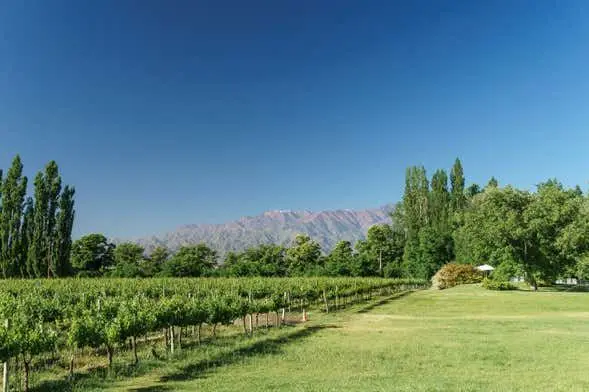
Valle de Uco is a high-altitude wine region at the foot of the Andes, made up of the Tunuyán, Tupungato and San Carlos departments. It sits about 100 km south of Mendoza city along Ruta Nacional 40. Go for the mountain wineries, the Andean scenery, the Manzano Histórico and, in summer, Laguna del Diamante.
High-altitude wineries and how to plan the visit
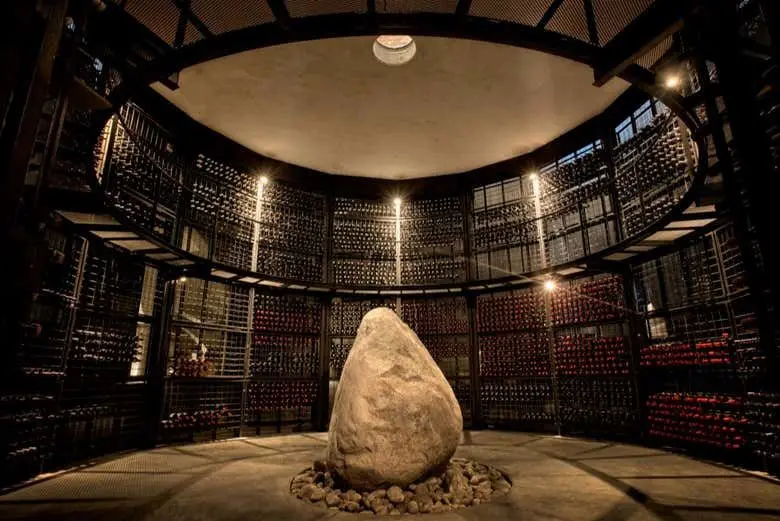
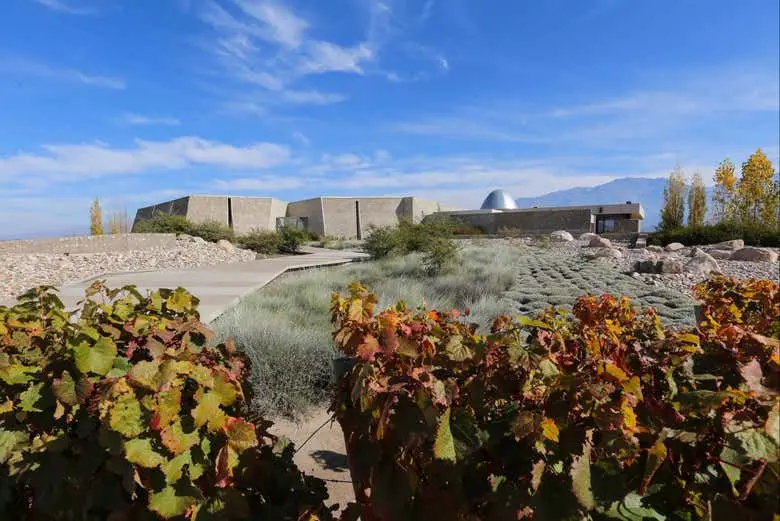
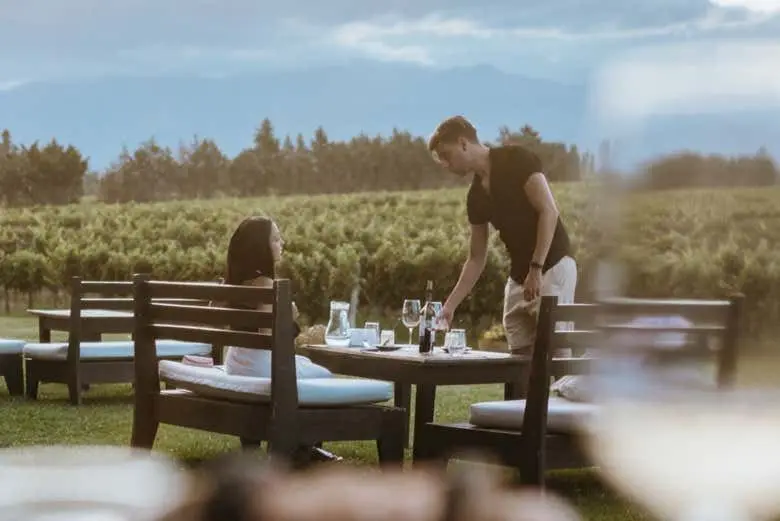
The vineyards here grow above 1,200 meters above sea level. A 2025 regional survey by the Mendoza government counted 109 registered wineries, and 50 of them are open to visitors. Gualtallary, Los Chacayes, Vista Flores and Altamira are the best-known areas. In Vista Flores, Clos de los Siete brings several wineries together under Michel Rolland's project, and Monteviejo has a third-floor restaurant with views of the mountains. Some wineries only receive guests by reservation, so check hours before you leave.
Manzano Histórico: San Martín history and clear streams
Manzano Histórico is a provincial reserve about 120 km from Mendoza city, at 1,200 meters in Tunuyán. Its clear streams and mountain landscape make it a good stop for a day out. The site has the San Martín monument, and the Retorno a la Patria monument marks the general's rest on his return to Argentine soil. There are campsites, a fish hatchery, an interpretation center and a Via Crucis. Many itineraries add the Cristo Rey del Valle as a stop.
Vista Flores, La Consulta, Tupungato and Tunuyán
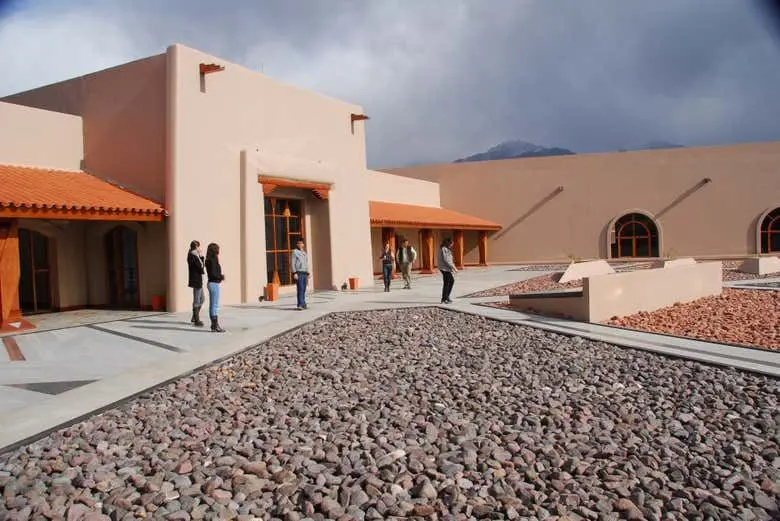
Vista Flores is one of the most picturesque villages in the valley, with wineries, homestyle restaurants and vineyards at the foot of the mountains. La Consulta and Tupungato are reached from Ruta 40. Tupungato is a tourist town at the foot of the mountains, with access to the Santa Clara River and Volcán Tupungato Provincial Park.
Tunuyán is the valley's largest town and has the most services for visitors, so it is the most practical base for a night's stay. Some wineries, such as a boutique estate in Vista Flores, have accommodation on site. If you want a quieter stay, choose the village closest to the wineries you plan to visit the next day.
Mountain landscapes for a day out
Beyond the wineries, the valley has mountain scenery to enjoy and explore. The Cordón del Plata fills the horizon, and the Alto de las Carreras meadows, the Quebrada del Cóndor and the Huayquerías desert are other natural attractions in the area. Short routes from Tunuyán also lead to the Dique Valle de Uco.
Mountain roads change with the season, so check road conditions before you leave, especially if you plan to go away from the main routes.
Laguna del Diamante, summer only
Laguna del Diamante is a natural reserve in San Carlos, at 3,300 meters above sea level and at the foot of Volcán Maipo. The access starts from Ruta Nacional 40, about 20 km south of Pareditas, and from the last paved stretch it is about 65 km of gravel to the reserve. Snow covers the circuit for eight to nine months a year, so it only opens in summer and into early autumn. Opening dates shift when late snowfalls hit, as happened in the most recent season.
Day entry runs from 7 am to 5 pm, and tickets are handled only online. You can hike, fish, ride bikes and picnic, and camping is also allowed. It is a long trip: the reserve is less than four hours from central Mendoza, so leave early.
Getting there
From Mendoza city, the main road is Ruta Nacional 40 heading south, about 100 km in total. The drive takes between one and two hours, depending on where in the valley you are going. Side roads from Ruta 40 lead to the wineries, and Ruta Provincial 89, known as the Camino del Vino, crosses the valley from east to west. Buses run from the Mendoza bus terminal to Tunuyán, and medium-distance services leave from there every hour. Inside the valley there is almost no frequent public transport, so you need your own car or a private transfer to move between wineries.
When to go
The valley has a mountain climate: temperatures drop with altitude, and nights are cool even in summer. The scenery changes with each season. In winter the Andes look snow-covered and the vineyards turn ochre, while spring and summer bring greener fields. Wineries can be visited at almost any time of year, though each has its own hours. For Laguna del Diamante, the season runs from summer into early autumn, and exact dates depend on snow and road conditions.
Tips
- Leave Mendoza early and plan two or three wineries per day, since the distances between them are long.
- Before you go, confirm whether the winery works by reservation only and what its hours are, because each one sets its own schedule.
- There are no bicycles for getting between wineries as in Maipú, so you will need your own car or a hired transfer.
- Bring a warm layer even in summer, because mountain weather changes quickly.
- Before heading to the lagoon, check the road status, since a late snowfall can delay the opening.
- For Laguna del Diamante, reserve your entry online ahead of time, as tickets are managed only digitally.
Frequently asked questions
Can you visit Valle de Uco without a car?
Yes, up to a point. Buses run from the Mendoza bus terminal to Tunuyán, and medium-distance services leave that terminal every hour. Between wineries, though, there is almost no public transport, so a private transfer is the practical choice for visiting them.
How long does it take to get there from Mendoza?
By Ruta Nacional 40, the drive takes between one and two hours depending on your destination. Vista Flores and Manzano Histórico are about 120 km from the city, so the trip is longer than it is to Tunuyán.
Is one day enough, or should you stay overnight?
One day covers two or three wineries if you leave early, but the schedule is tight. Two days let you add Manzano Histórico, a village and a relaxed meal. Laguna del Diamante needs a separate day because of the distance.
When is the best time to go to Valle de Uco?
Wineries receive visitors almost all year, each with its own hours. Laguna del Diamante is open from summer into early autumn, and exact dates change with snow and road conditions.
Can you reach Laguna del Diamante in an ordinary car?
The final stretch is a long gravel road at high altitude. Bring a vehicle in good condition and check road status before leaving, since conditions can change quickly with the weather.
What can you combine with a trip to Valle de Uco?
It pairs well with Mendoza city, about 100 km away, and with Laguna del Diamante when the season is open. From Tunuyán you can also reach the Dique Valle de Uco on a short route.
Weather in Uco Valley
Things to do in Uco Valley
Bodegas Salentein
See details →Reserva Natural Laguna del Diamante
See details →Reserva Natural Manzano Histórico
See details →Bodega Andeluna
See details →Bodega La Azul
See details →Alfa Crux (ex O. Fournier)
See details →Domaine Bousquet
See details →Bodega Rutini
See details →Bodegas Giménez Riili
See details →and 152 more · by department: Tunuyán, Tupungato, San Carlos
Where to eat in Uco Valley
Pasteleria Panaderia Cafeteria Tres Sueños
See details →La Posada del Jamon
See details →Rio extremo
See details →Café Colón
See details →El Bodegon de Uco
See details →Farrinaqua
See details →Frio's
See details →La Goleta
See details →Lomoro
See details →and 56 more · by department: Tunuyán, Tupungato, San Carlos
Where to stay in Uco Valley
Alpasion Lodge y Restaurant
See details →Casa Petrini
See details →El Paisano Casa de Campo
See details →Finca Ogawa
See details →Hotel de Turismo Tupungato
See details →Hotel Fuente Mayor
See details →Tunuyán
See details →Andeluna Winery Lodge
See details →Apart Nueva Era
See details →and 53 more · by department: Tunuyán, Tupungato, San Carlos
Tours that go to Uco Valley
See all →Uco Valley winery tour
High-altitude vineyards at the foot of the Andes in Tupungato, Tunuyán and San Carlos: a long day, but Mendoza's most striking wine scenery.
See activity →
Bus Vitivinícola: wineries without driving
A hop-on wine bus that picks you up at fixed stops around the city and follows a different wine route each day, so nobody has to drive.
See activity →
Winery dinners and sunsets in Mendoza
Dining among the vines with the Andes behind: from Michelin-starred tasting menus to sunset tapas and wine.
See activity →
Argentine asado class in Mendoza
Learn to light the fire, pick the cuts and manage the embers with a local grill master, then eat what you made with a good Malbec.
See activity →
Horseback riding in Mendoza
Horseback rides through farmland, foothills and Andean valleys: from an hour in Potrerillos to multi-day crossings from Manzano Histórico.
See activity →
Hiking in the Cordón del Plata
High-altitude day hikes from Vallecitos, above 3,000 m, among meadows and glaciers: your gateway to the Andes.
See activity →