Day trips
Aconcagua Provincial Park Tour from Mendoza
Ten hours to see the Americas' highest peak, its glaciers and Andean scenery.

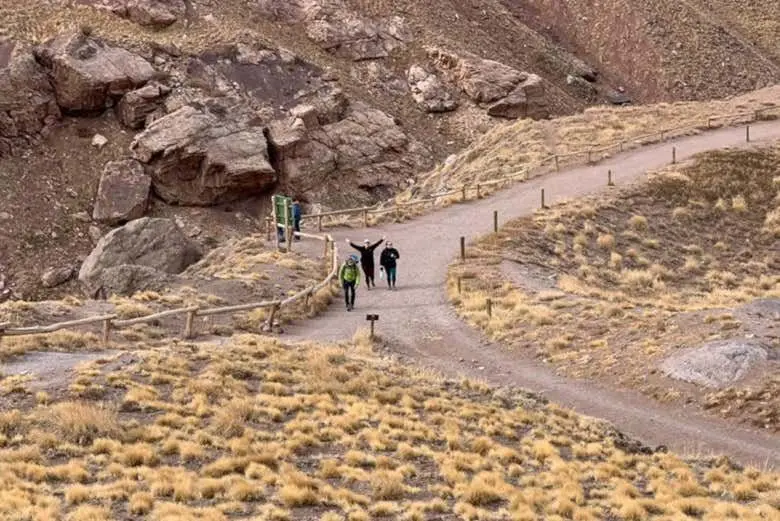
In short
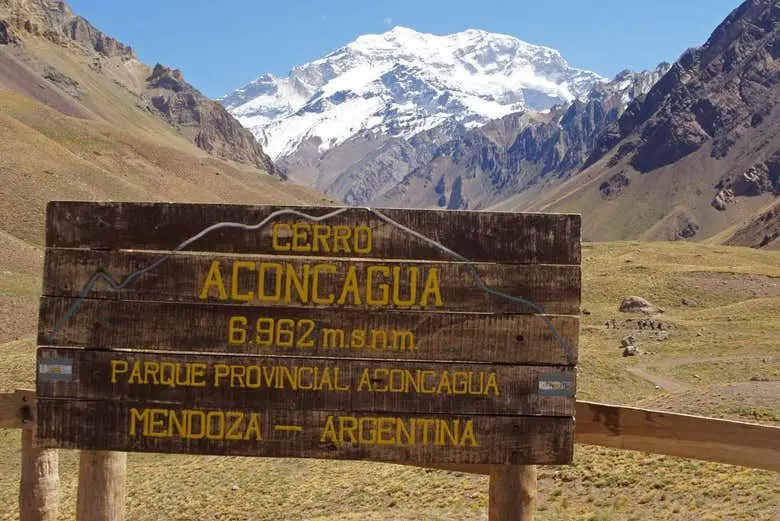
The tour heads to Aconcagua Provincial Park, a protected natural area in northwest Mendoza province. It lasts about 10 hours and departs from the city of Mendoza. The highlight is the 6,962-meter Aconcagua, the highest peak in the Americas, surrounded by glaciers that store water for the region. Expect big mountain scenery and a full day outdoors.
The itinerary
- Leave Mendoza city on National Route 7, heading northwest through the province.
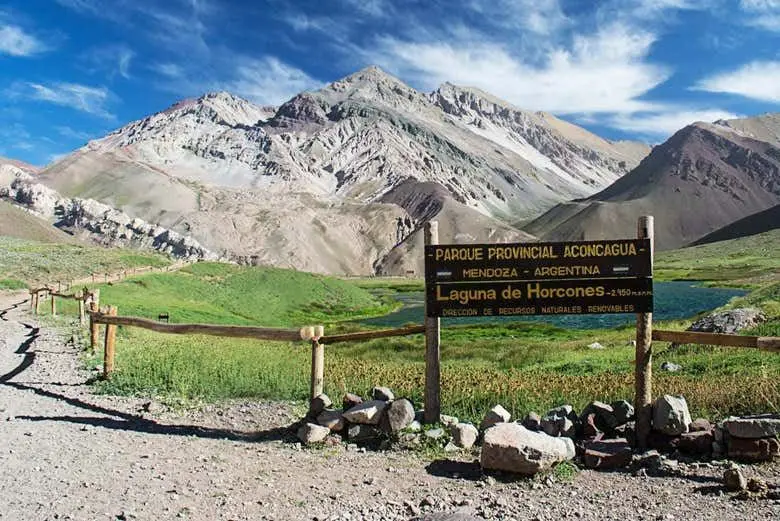
- Reach Horcones Lagoon, one of the most visited spots in the park year-round.
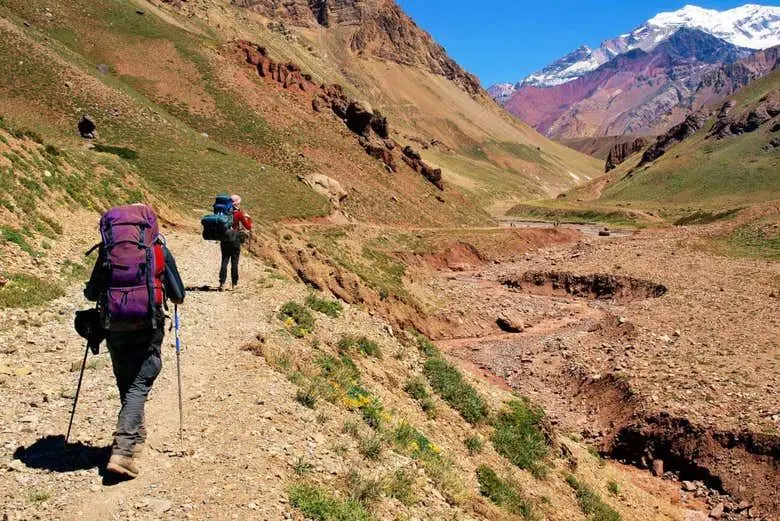
- Continue along the Horcones valley to Confluencia, a common stop on trekking routes.
- Further in, Plaza de Mulas sits at about 4,300 meters, a base camp at the foot of Aconcagua.
- Return by the same road to the city of Mendoza.
What you will see
Aconcagua is the park's main attraction. At 6,962 meters, it is the highest peak in the Americas and in the Western Hemisphere. The area was protected in 1983 and sits in the Las Heras department, northwest of Mendoza city. Peaks above 5,000 meters surround the mountain, along with deep valleys and rivers that start on its slopes. Some visitors come just to admire the scenery, while others choose trekking or the climb.
The park also holds natural and cultural value. The park's glaciers help store water for the area, and there are archaeological sites linked to the Qhapaq Ñan, a network of Inca roads that UNESCO recognizes. Many visitors head to Horcones Lagoon and Plaza de Mulas, a base camp at about 4,300 meters. In the 2024-2025 summer season, the park received more than 83,000 people.
Tips
- Dress in layers: the climate is dry and cold, with big temperature changes depending on altitude.
- Check the park's status before you go, since it can close because of weather conditions.
- If you plan trekking or climbing, get the required permits on the official site before traveling.
- Plan for the summer season, roughly November to March, when trekking and climbing are most active.
- Travelling with kids? Entry to Plaza de Mulas for trekking is limited to people over 13.
Who it suits
- Mountain lovers
- You can see the Americas' highest peak up close without having to climb it.
- History fans
- There are archaeological sites linked to the Qhapaq Ñan, an Inca road network that UNESCO recognizes.
- Landscape photographers
- The contrast of peaks, glaciers and valleys offers many frames in a single day.
Frequently asked questions
How long does the tour last?
The tour lasts about 10 hours. According to provincial tourism information, the drive from Mendoza city to the park takes about three hours.
How far is the park from Mendoza?
According to the sources consulted, the park is about 180 to 185 km from the city, along National Route 7. Figures vary a little depending on the source.
Do I need a permit to enter?
For trekking and climbing, a permit is mandatory and is arranged on the official site before you travel. For a visit without trekking, the sources consulted do not specify.
When is the best time to go?
The summer season runs from November to March, according to official information. One tourism source gives late April as the end, so check before you travel.
What stops does this tour include?
The available data does not detail the stops for this tour. The route above describes general park access, so confirm the itinerary before you reserve.
Can children go on this tour?
The data does not give a general minimum age. To enter Plaza de Mulas on trekking, the park regulations require being over 13 years old.
Other tours

High Andes Excursion from Mendoza: Aconcagua and Border
A full day through the mountains, with Aconcagua views and a stop at the Argentina-Chile border.
See tour →
Cacheuta Thermal Park Day Trip, Luján de Cuyo
Natural thermal pools beside the Mendoza River, with Andes mountain views.
See tour →
Atuel Canyon and San Rafael Day Trip from Mendoza
A full day from Mendoza to see Atuel Canyon and the Valle Grande reservoir.
See tour →